
Decision on whisky trade mark in Iran
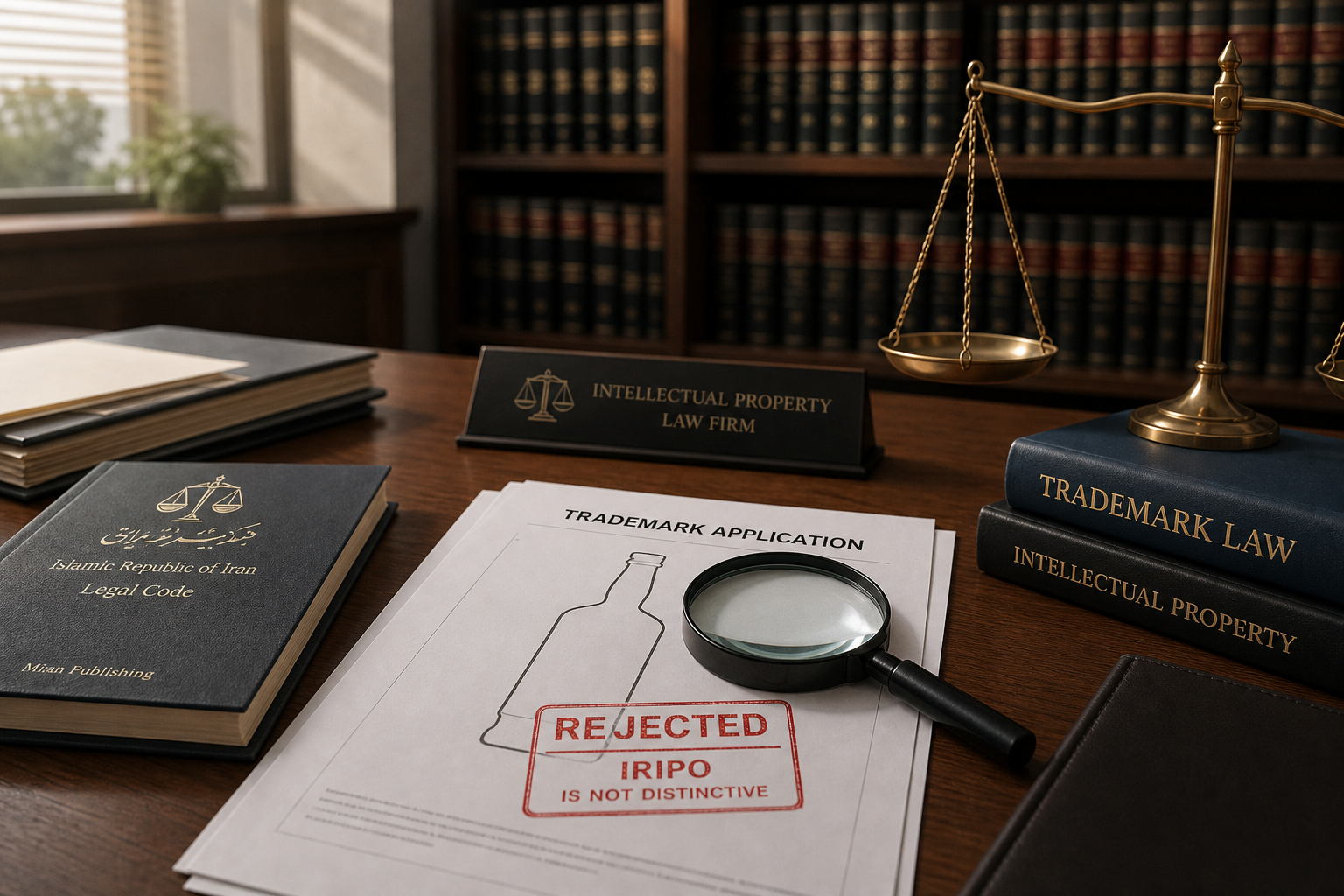
Reza Badamchi summarises a recent dispute in Iran concerning a whisky trademark. According to Article 32, Clause (b) of the Iranian Law on Registration of Patents, Industrial Designs, and Trademarks, marks that are contrary to public order, morality, or Sharia principles may be refused registration.
The applicant sought to register a mark for alcoholic goods. The examiner refused the application on absolute grounds, citing Iran’s prohibition on the commercial promotion of alcoholic beverages and the public policy underlying trademark registration for such products.
Absolute grounds in Iran
Article 32(b) allows refusal where a mark is inconsistent with public order or religious and moral standards. Even where a mark is distinctive and not confusingly similar to prior rights, the Office may reject applications whose designated goods include alcoholic drinks or other prohibited categories.
- Class 33 (alcoholic beverages) applications are generally refused on absolute grounds.
- Marks alluding to alcohol for related goods may also attract scrutiny.
- Foreign registrations do not override Iranian public order exceptions.
- Appeals must address both statutory text and established IIPC practice.
Broader context
The decision is consistent with long-standing policy that trademark protection cannot be used to legitimise trade in goods whose sale is restricted domestically. Rights holders seeking brand protection in Iran should review specifications carefully and consider alternative classifications or non-alcoholic product lines where appropriate.
Reza Badamchi & Associates provides clearance advice and prosecution strategy for trademarks subject to public order and morality objections in Iran.