
Ruling on co-existence agreements in Iran
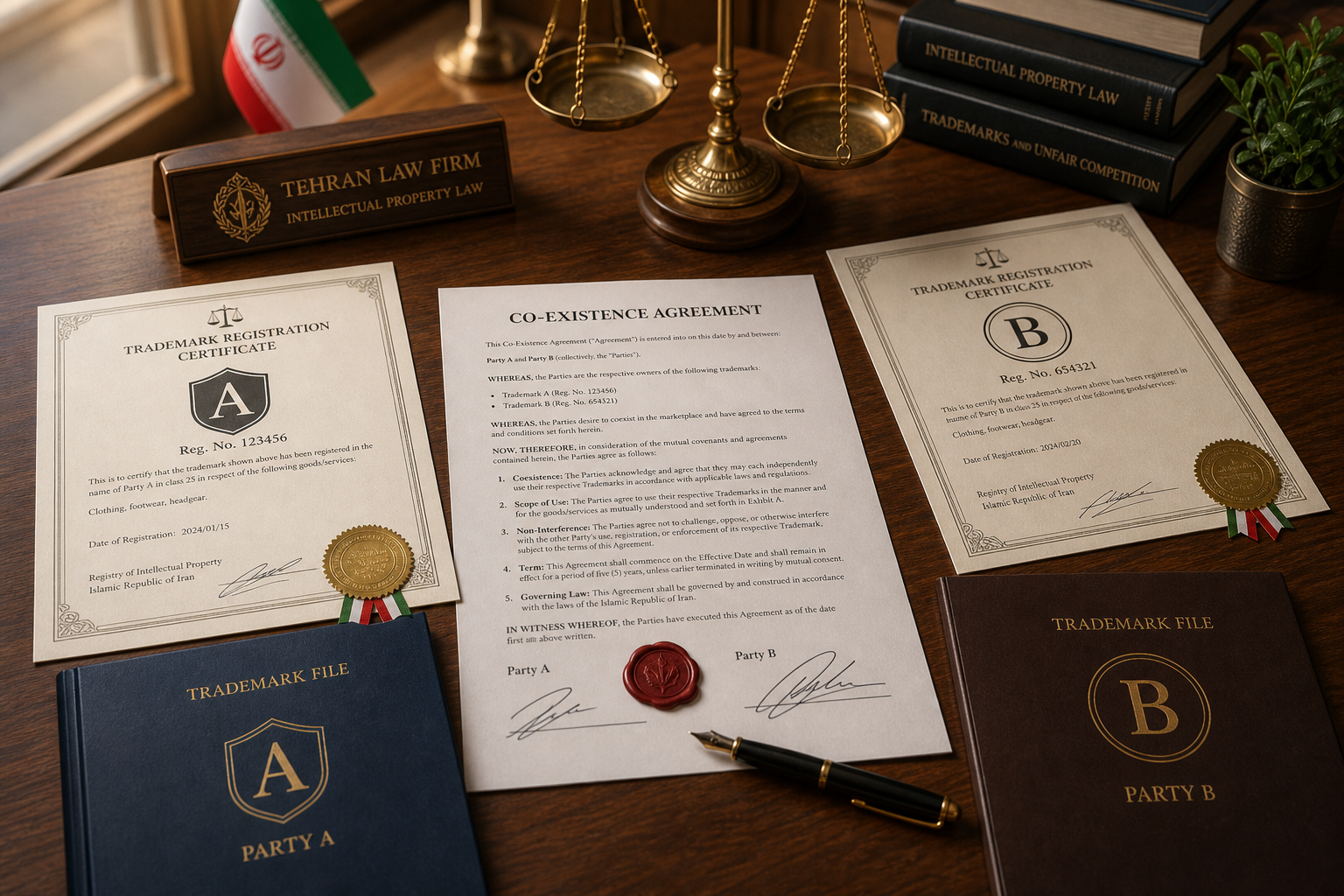
Reza Badamchi discusses a recent case involving an Iranian and a Belgian company in this post for Class 46. In 2020, an Iranian company submitted an application to register a trademark that conflicted with an earlier Belgian registration. The parties negotiated a co-existence agreement—but the Industrial Property Office’s treatment of that agreement became the central issue on appeal.
Co-existence agreements are commonly used internationally when two owners agree to parallel use of similar marks in defined territories, classes, or channels. In Iran, however, examiners and appeal boards have historically scrutinised such agreements closely to ensure that public confusion will not result and that the agreement does not circumvent mandatory provisions of the Trademarks Registration Law.
Issues before the Office
The case raised whether a co-existence agreement submitted during prosecution could overcome an examiner’s refusal based on prior identical or similar marks. Key questions included whether both parties had authority to bind their marks, whether the agreement was sufficiently clear on scope and geographic limits, and whether consent could be accepted where the marks remained visually similar for overlapping goods.
- Written consent and co-existence deeds must be signed by authorised representatives of both parties.
- Agreements should specify goods, services, classes, and any format or usage limitations.
- The Office may reject consent if confusion among Iranian consumers remains likely.
- Foreign co-existence agreements may require legalisation and certified translation.
Takeaways for practitioners
Brand owners should not assume that an agreement executed abroad will automatically persuade the Iranian examiner. Early coordination between local and foreign counsel—and alignment with IIPC practice on letters of consent—is essential when similar marks coexist in different jurisdictions.
Reza Badamchi & Associates assists clients with co-existence negotiations, consent documentation, and appeals before the Industrial Property Office.